I Mua I Ke Ola
Urban & Community
Forestry Recovery
for Fire-Affected
Areas of Maui
If your property was affected by the 2023 fires, you may qualify for free plants and trees. Complete this form to help us understand your needs and coordinate available plants through our partner growers.🌱 Then prepare for planting.
Healthy trees begin with healthy soil ↓
💚 Free Community WorkshopsPrepare your site for successful planting by learning practical skills in soil building, sheet mulching, tree planting, and long-term care. Workshop participants receive free resources such as compost, mulch, biochar, composting systems, and plants (resources vary based on workshop).View Upcoming Workshops
I Mua I Ke Ola is a multi-year community forestry initiative led by Maui Nui Botanical Gardens and Kaulunani Urban and Community Forestry Program to support recovery in fire-affected areas of Maui. Working in partnership with communities and local organizations, the project helps identify needs and coordinates access to trees, arborist services, technical support, and resources that strengthen resilient, community-centered urban forests.
The ʻulu pictured below at Lāhainā Methodist Church survived the 2023 fire; it continues to provide shade, nourishment, and a living connection to the heritage of Lāhainā.
About the Project
I Mua I Ke Ola is a multi-year initiative led by Maui Nui Botanical Gardens (MNBG) to support post-fire recovery of community and urban forests in fire-impacted areas of Maui. This project focuses on helping communities restore trees, canopy, and long-term urban forest health where it matters most. MNBG’s role in this work is to listen first. Working alongside residents, organizations, and ʻāina stewards, the project identifies strengths, gaps, and priorities across both physical landscapes and community capacity. Particular attention is given to highly valued public and community-serving spaces such as schools, parks, community centers, and heritage sites.I Mua I Ke Ola is being implemented in two connected phases, allowing community needs to guide how support is delivered over time. Based on community-identified priorities, support may include technical expertise, arborist services, plant materials, and related resources that strengthen long-term urban forest health. Throughout the project, MNBG works to coordinate resources responsibly, follow best management and biosecurity practices, and strengthen networks that support long-term stewardship.The name I Mua I Ke Ola, meaning “forward toward life,” reflects a shared commitment to moving ahead together by supporting the healing of both land and community as Maui works to restore resilient, healthy urban forests.
The photograph below shows a portion of the Kula Community Watershed Alliance's 120-acre burn scar restoration area in Pōhakuokalā Gulch. The fenced kīpuka visible to the left supports erosion control, native seed-banking, and serves as an educational demonstration garden.
How the
Project Works
I Mua I Ke Ola is being implemented in two connected phases.Phase One: Listening, Mapping & Early Support
(Winter-Summer 2026)Phase One centers on outreach, site visits, and conversations with community members, organizations, and ʻāina stewards to understand local needs, existing efforts, and opportunities for coordination. During this time, we are offering:🏡 Initial site visits and needs assessments🎓 Educational workshops and technical trainings🌳 Early stabilization support for surviving trees🌱 Limited pilot distributions of trees and suppliesThese efforts ensure that support aligns with community priorities and existing recovery efforts.Phase Two: Supporting On-the-Ground Action
(Fall 2026-Spring 2028)Information gathered during Phase One guides the delivery of coordinated resources and technical assistance. Beginning in Fall 2026, the project will move into broader implementation, including:💧 Coordinated distribution of trees, soil amendments, and irrigation supplies🌳 Contracted arborist and consultant services🌿 Demonstration landscape development🤝 Stewardship and maintenance supportNew partners may enter the process at any time throughout the project period.
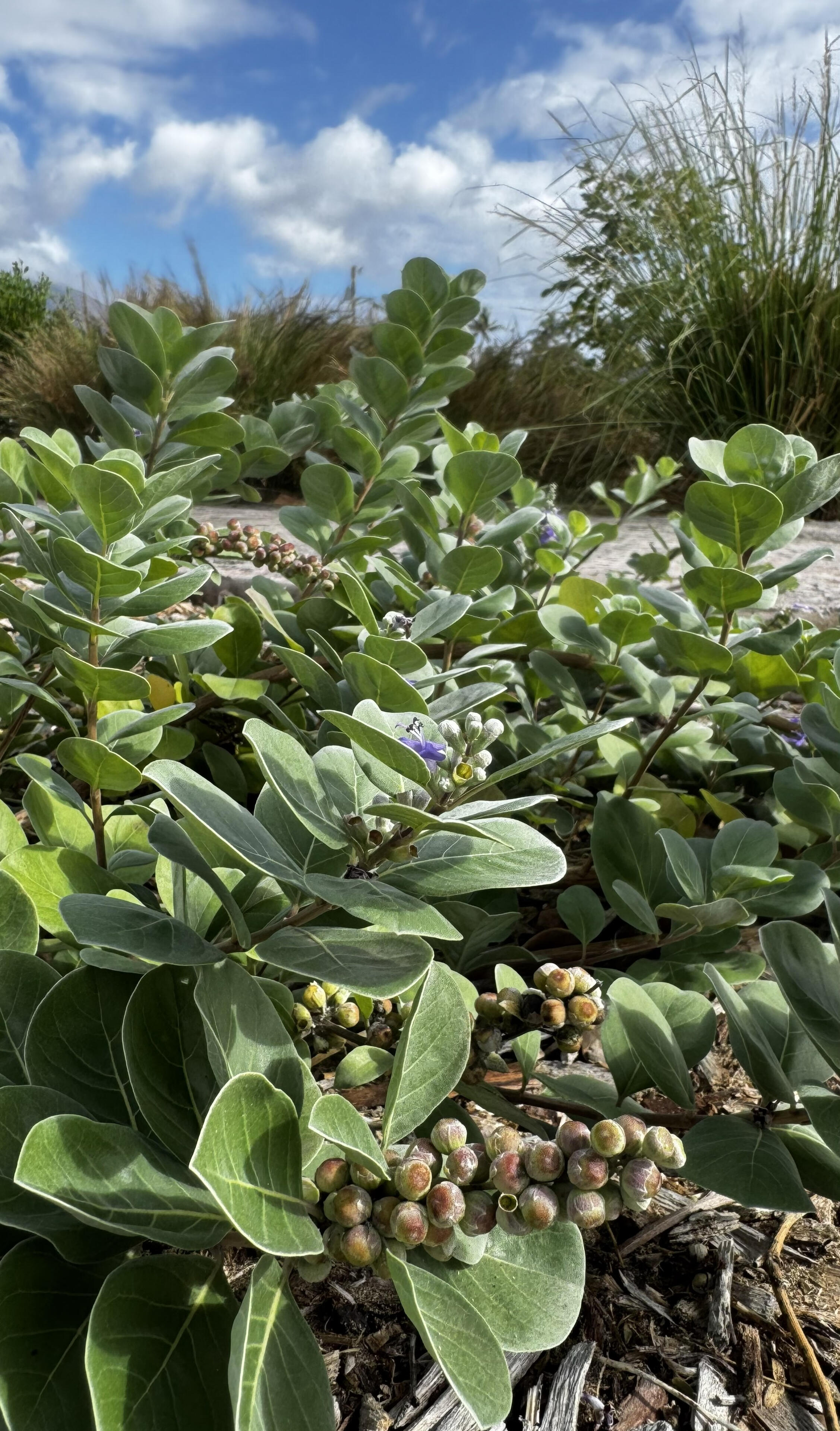
Pōhinahina and pili grass pictured above were planted at Jodo Mission Temple following the 2023 fire, contributing to long-term canopy recovery and cultural landscape restoration in Lāhainā.Plantings were supported by Treecovery, the Kauluwehi Biocultural Garden at the University of Hawaiʻi Maui College, and Maui Rotary Clubs.
The mango tree pictured below at Old Lāhainā Prison survived the 2023 fire, reflecting the resilience of Maui’s landscape and community.
Who This is For
I Mua I Ke Ola is designed to support individuals and organizations caring for shared or community-serving lands in fire-impacted areas of Maui.This may include:
🏘️ Community organizations and nonprofit groups🏫 Schools, parks, and other community-serving spaces🌺 Land stewards and cultural practitioners👨👩👧👦 Residents and familiesEngagement is grounded in relationship-building and responsiveness to local context, recognizing that needs and capacities vary across communities.
What Support May Look Like
Support through I Mua I Ke Ola is guided by community-identified priorities and available resources.Depending on needs and project capacity, support may include:🌳 Connecting communities to arborist services and technical expertise🌱 Access to trees and planting materials📚 Guidance on species selection, planting, and long-term care💧 Support related to soil health, irrigation, and site preparation🤝 Coordination with existing recovery, restoration, and stewardship effortsAll support is approached thoughtfully, with attention to best management practices, biosecurity considerations, and long-term stewardship.
The kalo, 'uala, and papaya shown in the picture below were planted post-fire at the YMCA in Lāhainā
Resources & Guidance
Explore tools, guidance, and resources to support your planting and restoration efforts.Visit the Kaiāulu Resource Hub to access:🌳 Tree Planting & Care Guidance
🌱 Post-Fire Soil Safety Information
🔥 Fire-Resilient Landscaping Guidance
🌊 Ocean-Friendly Landscaping Information
🌺 Native & Canoe Plant Landscaping Guidance by Zone
📋 Fire Recovery Planning & Community Voice Reports
At the monthly Lāhainā Pa'ūpili event, community members receive native plants grown and donated by Maui Nui Botanical Gardens through Kupu's MALU Initiative. MNBG Native Plants Restoration Technician Alex Calma, pictured below on the left, propagated and donated more than 1,000 native plants to support recovery efforts in Lāhainā and Kula.
Workshops & Events
🌿 Restoring Lāhainā: Urban Compost & Sheet MulchingRestore the Soil • Renew the Land📅 Saturday, October 24, 2026
🕗 8:00–10:00 AM
📍 Lāhainā Jodo Mission
💲 FreeJoin Maui Farmer Support Network and Maui Nui Botanical Gardens for a hands-on workshop focused on restoring fire-affected landscapes through compost, mulch, native plants, and practical soil-building techniques. restoring-lahaina-workshop-jodo…You’ll learn:🌱 How healthy soil connects with fire prevention, climate resilience, and land restoration
♻️ How to turn food scraps and green waste into healthy soil through urban composting
🍂 How sheet mulching can protect soil, conserve moisture, and reduce weeds
🌺 How to use native plants thoughtfully in Lāhainā landscapes, with guidance from MNBG plant specialists and a demonstration plantingEvery participant takes home:- Native Plant Companion Kit with 3 complementary native plants
- Compost
- Biochar
- MulchThe native plants are selected to be firewise, drought tolerant, and well suited to Lāhainā’s growing zone, so you can put what you learn into practice in your own growing space. restoring-lahaina-workshop-jodo…Register Here → Restoring Lāhainā Workshop
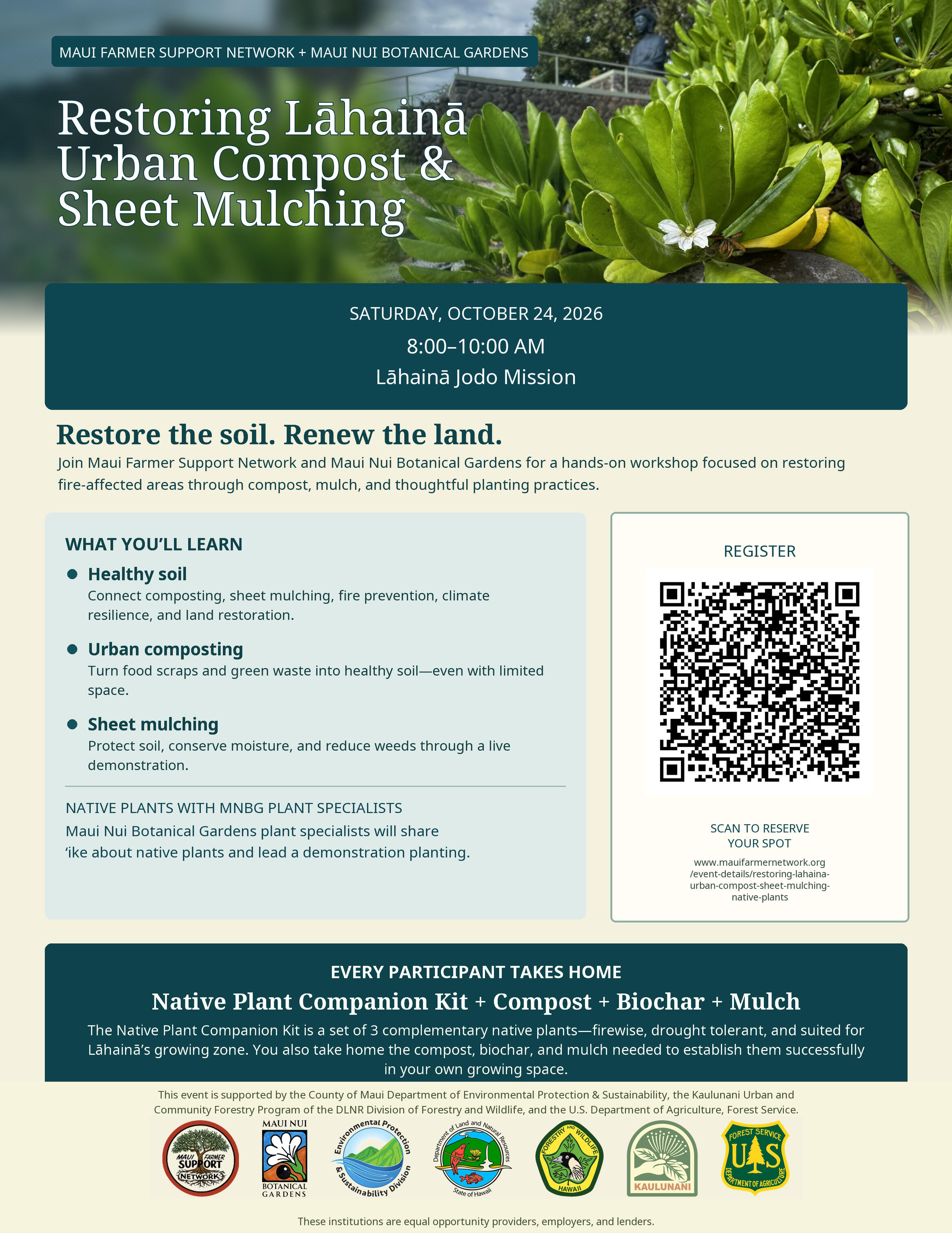
The naupaka kahakai shown in the picture below was planted post-fire at the YMCA in Lāhainā
Work With Us
We are building a network of local contractors and service providers interested in supporting community forestry recovery efforts in Lāhainā and Kula.Areas of work may include:🪵Tree care & arboriculture
💧 Irrigation
🌿 Landscaping & planting
🌱 Soil health & site restoration
🎓 Public education & workshop supportThis is not a formal job application. It is a way for us to learn about local capacity and connect with skilled professionals as opportunities arise.
Paid opportunities may arise over the next two years as project work develops.
Contact Us
Partner Support
I Mua I Ke Ola is supported by the Kaulunani Urban and Community Forestry Program of the DLNR Division of Forestry and Wildlife, and the U.S. Department of Agriculture, Forest Service.Equal Opportunity Statement
USDA and Maui Nui Botanical Gardens are equal opportunity providers and employers.